Hayden Lake Watershed Improvement District Logo
  • Home
  • The District
    • HLWID – District Matters
      • Improvement District vs. Association – What’s the Difference?
      • Privacy Policy
    • Drinking Water Grant Project
    • Board of Directors
    • Lake Managers
    • Monthly Meetings
  • The Watershed
    • Blue-Green Algae
    • Citizen Science
    • HLWID – District Matters
      • Improvement District vs. Association – What’s the Difference?
    • Living on Hayden Lake
      • Rights, Permits, etc.: Who to Contact
      • Lake Debris
    • Invasive & Noxious Weeds
      • Invasive Species Found in Hayden Lake
      • Curly-Leaf Pondweed
      • Eurasian Watermilfoil
    • Recreation
      • Play Safely on Hayden Lake
    • Water Quality
      • Lake Water Quality Studies
      • Hayden Lake Water Quality
      • Idaho Water Quality Standards & Hayden Lake
      • The Eutrophication of Hayden Lake
    • The Watershed
      • Hayden Lake Watershed
      • Honey Badger Project
      • English Point – a Cherished Resource
  • News
  • Contact Us
  • Home
  • The District
    • HLWID – District Matters
      • Improvement District vs. Association – What’s the Difference?
      • Privacy Policy
    • Drinking Water Grant Project
    • Board of Directors
    • Lake Managers
    • Monthly Meetings
  • The Watershed
    • Blue-Green Algae
    • Citizen Science
    • HLWID – District Matters
      • Improvement District vs. Association – What’s the Difference?
    • Living on Hayden Lake
      • Rights, Permits, etc.: Who to Contact
      • Lake Debris
    • Invasive & Noxious Weeds
      • Invasive Species Found in Hayden Lake
      • Curly-Leaf Pondweed
      • Eurasian Watermilfoil
    • Recreation
      • Play Safely on Hayden Lake
    • Water Quality
      • Lake Water Quality Studies
      • Hayden Lake Water Quality
      • Idaho Water Quality Standards & Hayden Lake
      • The Eutrophication of Hayden Lake
    • The Watershed
      • Hayden Lake Watershed
      • Honey Badger Project
      • English Point – a Cherished Resource
  • News
  • Contact Us
Facebook-f

Cyanobacteria-HAB Advisory Continues – Watch Out!

Public Health Advisory Still in Effect
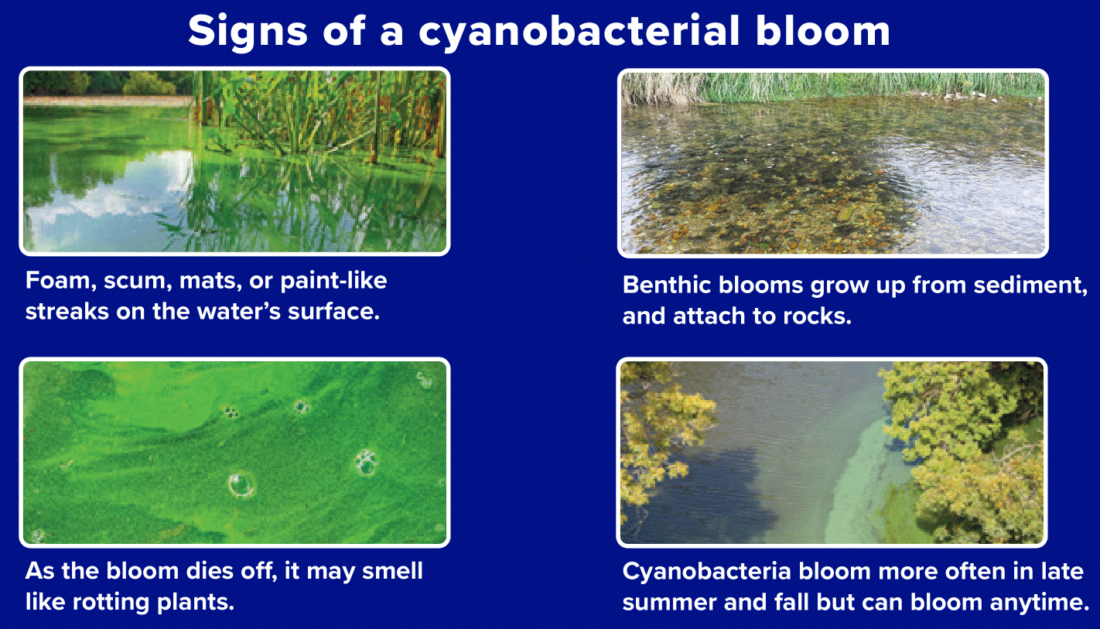
An infographic showing signs there is a cyanobacteria bloom, with related pictures: Fam, Scum, Mats, or paint-like streaks on the water's surface; Benthic blooms grow up sediment, and attach to rocks; As the bloom dies off, it may smell like rotting plants; and Cyanobacteria bloom more often in late summer and fall but can bloom anytime.

DEQ continues to monitor the north end of Haden Lake, keeping an eye on the cyanobacteria bloom that lead to the Panhandle Health District-issued advisory on July 27th. For the advisory to be lifted, PHD requires two consecutive data points from DEQ testing that show low concentrations of cyanobacteria and cyanotoxins – and that hasn’t happened yet. 

Keep in mind that cyanobacteria survival requires a phosphorus-heavy nutrient mix and warm temperatures. (See “When Will it End?“) Even though the days are getting shorter and cooler, you might be surprised to learn that this is the time of year when cyanobacteria blooms surge. We won’t have enough rain to upset the HAB-favorable nutrient balance nor enough cooling to put a definitive end to the bloom until well into October! 

Click here to learn more about cyanobacteria and the bloom phenomena.

Protect Your Loved Ones – Including Your Animals

It is as important now as at the start of the bloom to make sure everyone stays safely away from the potentially toxic areas – including pets and livestock. Follow these tips from the Idaho Department of Health and Welfare’s Animal Safety Alert.
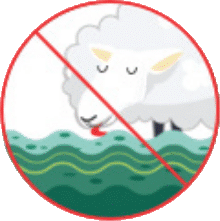
Don't Drink the water graphic , represented by a universal no over an image of a shep drinking water from a lake

Do not let them drink the water.

Even if the cyanobacteria is hard to see, there could still be harmful amounts of toxins in the water.

Do not let them eat or play with dead animals found near the bloom.

Given the bloom’s toxic qualities, no animals are safe, not even wildlife. Allowing pets to eat suspicious leftovers near a bloom increases their risk of getting poisoned too.

Do not let them eat dead animals found near the bloom, reprsented by a universal no symbol over the image of a dog eating a dead carcass near the lake

Do not let them eat mats of cyanobacteria.

It isn’t just dead animals either. The smell and taste of the muck may be tantalizing – and toxic.

Do not let them eat near the water.

It’s better to be safe than sorry. Animals should be fed away from the lake, to avoid any chance of exposure.

Do not let them swim or play in the water, represented by a universal no over the image of a dog swimming in the water

Do not let them swim or play in the water

or the muck. If direct contact happens, wash them off immediately with clean water.

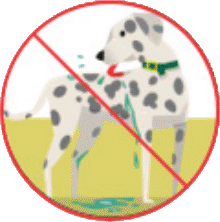
Do not let them lick their fur and paws after being in the water.

Should they end up near the water, prevent them from licking any possible cyanobacteria off of their fur.

Do not let them lick their fur and paws after being in the water, represented by a universal no over the image of a dog picking themselves after being in the lake

If your animal appears to get sick after contacting infested water, please seek veterinary help or call the ASPCA Animal Poison Control Center at (888) 426-4435. 

Click here to download the complete Idaho Department of Health and Welfare Animal Safety Alert in PDF format.

Seeing suspicious water reminds us to be cautious. But, you cannot tell if a cyanobacterial bloom is toxic just by looking at it. When in doubt, keep out of the water! And, check the Idaho Recreational Water Health Advisories map to see if the advisory has been lifted.

References - find more on the web:

Idaho Recreational Water Health Advisories

https://www.gethealthy.dhw.idaho.gov/recreational-water-health-advisories

07/26/2024: Health Advisory for North Hayden Lake

https://panhandlehealthdistrict.org/news-release/07-26-2024-health-advisory-for-north-hayden-lake/

Idaho DEQ Role in Cyanobacteria Harmful Algal Bloom Response

https://storymaps.arcgis.com/stories/4990590489e04fc18ff1ce0ddc01099a

Animal Safety Alert

https://cdn.shopify.com/s/files/1/1072/5564/files/HAB_Sign_WEB_20230802.pdf?v=1691526309

Cyanobacteria Blooms FAQ

https://www2.deq.idaho.gov/admin/LEIA/api/document/download/18545

HLWID Home

News From the 'Shed

Press Release: Public Meeting on Lake and Creek Restoration Efforts

HLWID Accepting Proposals for Professional Engineering Services

’25 Invader Outlook: You’re Invited to the Community Meeting

More news ...

The District

  • About the HLWID
  • HLWID – District Matters
  • Drinking Water Grant Project
  • Board of Directors
  • Lake Managers
  • Monthly Meetings
  • About the HLWID
  • HLWID – District Matters
  • Drinking Water Grant Project
  • Board of Directors
  • Lake Managers
  • Monthly Meetings

The Watershed

  • Blue-Green Algae
  • Citizen Science
  • HLWID
  • Lake Debris
  • Living on Hayden Lake
    • Rights, Permits, Questions, Concerns: Who to Contact
      • Invasive & Noxious Weeds
  • Recreation
  • The Watershed
  • Water Quality
  • Blue-Green Algae
  • Citizen Science
  • HLWID
  • Lake Debris
  • Living on Hayden Lake
    • Rights, Permits, Questions, Concerns: Who to Contact
      • Invasive & Noxious Weeds
  • Recreation
  • The Watershed
  • Water Quality

Let's Stay in Touch!

Facebook-f

See our Privacy Policy

Sign up for our Email Updates

Copyright 2025 © All rights reserved, Hayden Lake Watershed Improvement District.

Monday 4/16, 7:00 p.m.

HLWID Monthly Meeting

HLWID's Monthly Meetings will move to teleconferencing in order to ensure the health and safety of our constituents. For 4/16's meeting, dial 641-715-0861 and enter code 398963# at the prompt. This is a public meeting; all are welcome.

Verified by MonsterInsights